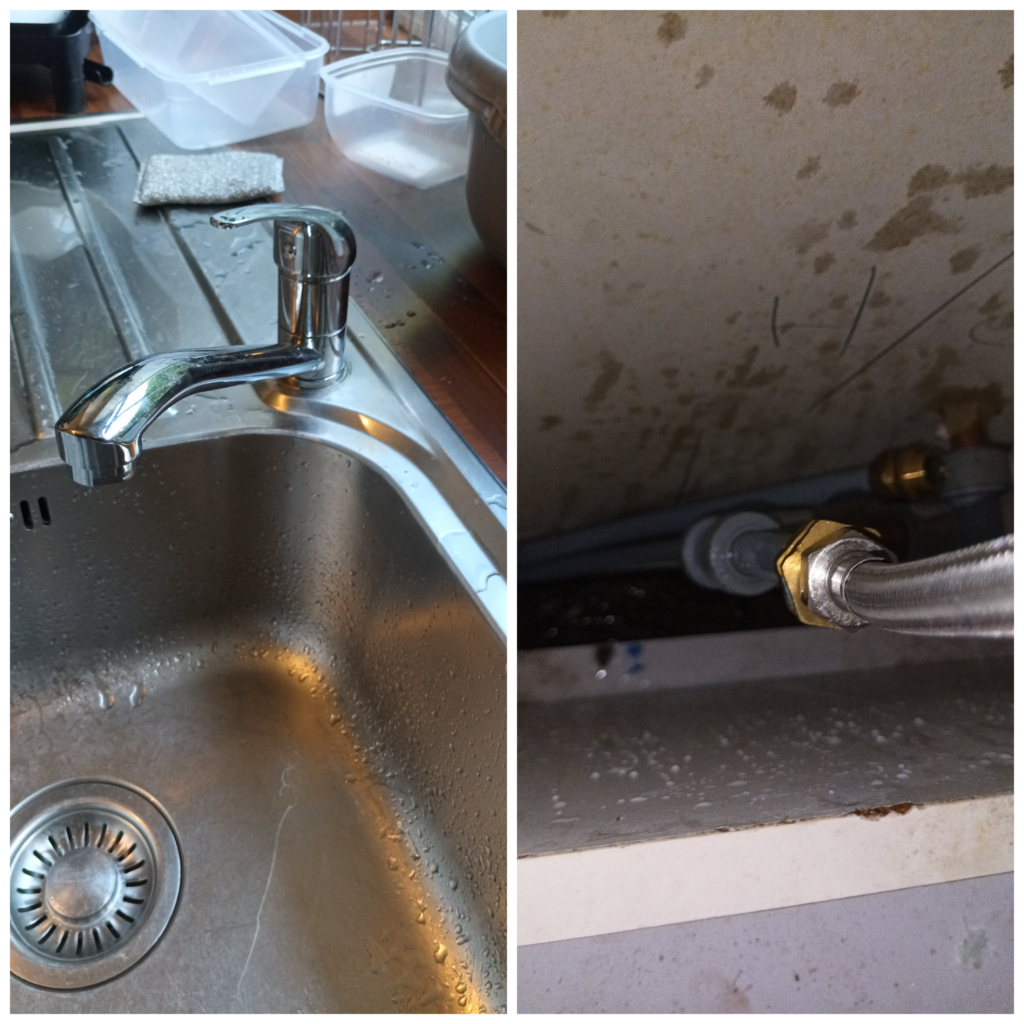
Sometimes a simple job turns into an adventure. Today was one of those days—and it taught me a valuable lesson about patience, problem-solving, and why you can’t always assume the shortcuts exist. The mission was straightforward: replace a dripping kitchen tap. Simple enough, right?
Wrong.
The Hunt for the Shutoff Valve 🔍
The first step to any tap replacement is always the same: find the shutoff valve. Look under the kitchen sink, turn the valve, isolate the water. Job half done before you even start.
But there was just one problem—there wasn’t one.
I checked under the sink. Nothing. No valve, no access point, not even a hint of where one might have been. So I thought about the boiler shutoff valve instead. Surely that would be accessible?
Wrong again.
After a thorough search, it became clear: the shutoff valves were either inaccessible or potentially built over during a previous renovation. Whether they’d been sealed behind walls, removed entirely, or simply never installed to begin with remained a mystery. But mysteries don’t solve dripping taps.
The Nuclear Option ☢️
When the convenient solutions aren’t available, you go nuclear.
Complete water circuit shutdown.
Not ideal. Not quick. But effective.
I shut down the entire system and emptied the water tanks—a proper, methodical job to ensure no water pressure remained in the pipes. It felt excessive for one dripping tap, but there was no alternative. Safety first, shortcuts never.
Once the system was completely depressurised and empty, I could finally remove the old tap without any surprises.
The Replacement 🔧
With the water system neutralised, the actual tap replacement went smoothly. Out with the old dripping unit, in with the new one. The new tap was fitted securely, and the hose connections were made tight and true—no rushing, no guessin